
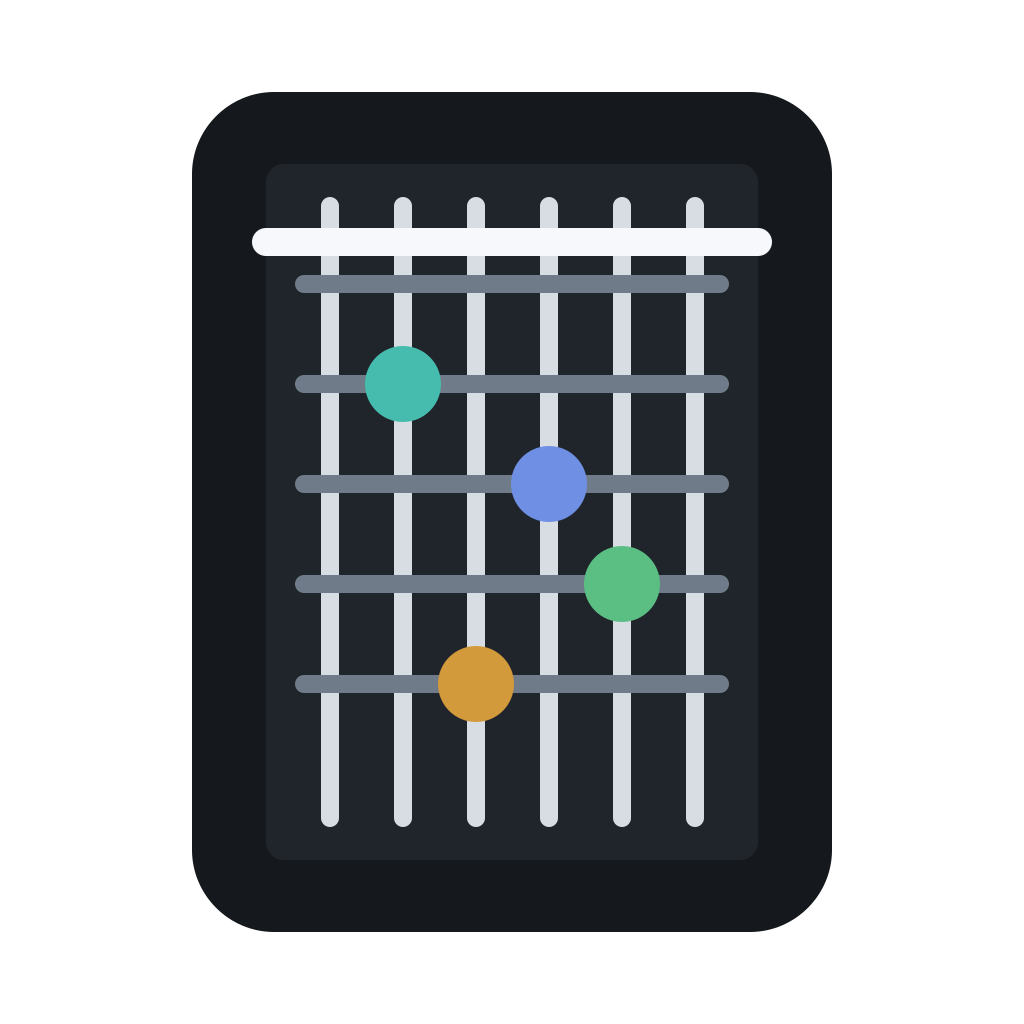
Guitar Chord Voicings vs Inversions: What's the Difference?
Chord voicing and chord inversion are different concepts. Voicing is which notes you play where. Inversion is which note is in the bass. Learn both to make your chord progressions sound professional.
Guitarists confuse these two concepts constantly. They're different, and both matter.
Inversion: which note is in the bass
- Root position = root in the bass (C is lowest note in a C chord)
- First inversion = third in the bass (E is lowest)
- Second inversion = fifth in the bass (G is lowest)
Inversion changes the harmonic function. A C chord with E in the bass sounds less stable than a C chord with C in the bass. Bass players control inversions — what the bassist plays determines the inversion the listener hears.
Voicing: which notes go where
A C major chord contains C, E, and G. You can arrange these three notes across six strings in dozens of ways. Each arrangement is a different voicing.
- Close voicing: notes are stacked as tightly as possible (C-E-G on adjacent strings)
- Open voicing: notes are spread across the fretboard (C on 5th string, G on 4th, E on 3rd)
- Drop voicings: one note dropped an octave for wider spacing
Voicing changes the color and playability of a chord without changing its harmonic identity.