
How a Capo Changes Guitar Chords: Transpose Without Relearning Shapes
A capo lets you play in any key using familiar open chord shapes. Learn how capo placement changes the actual chord names.
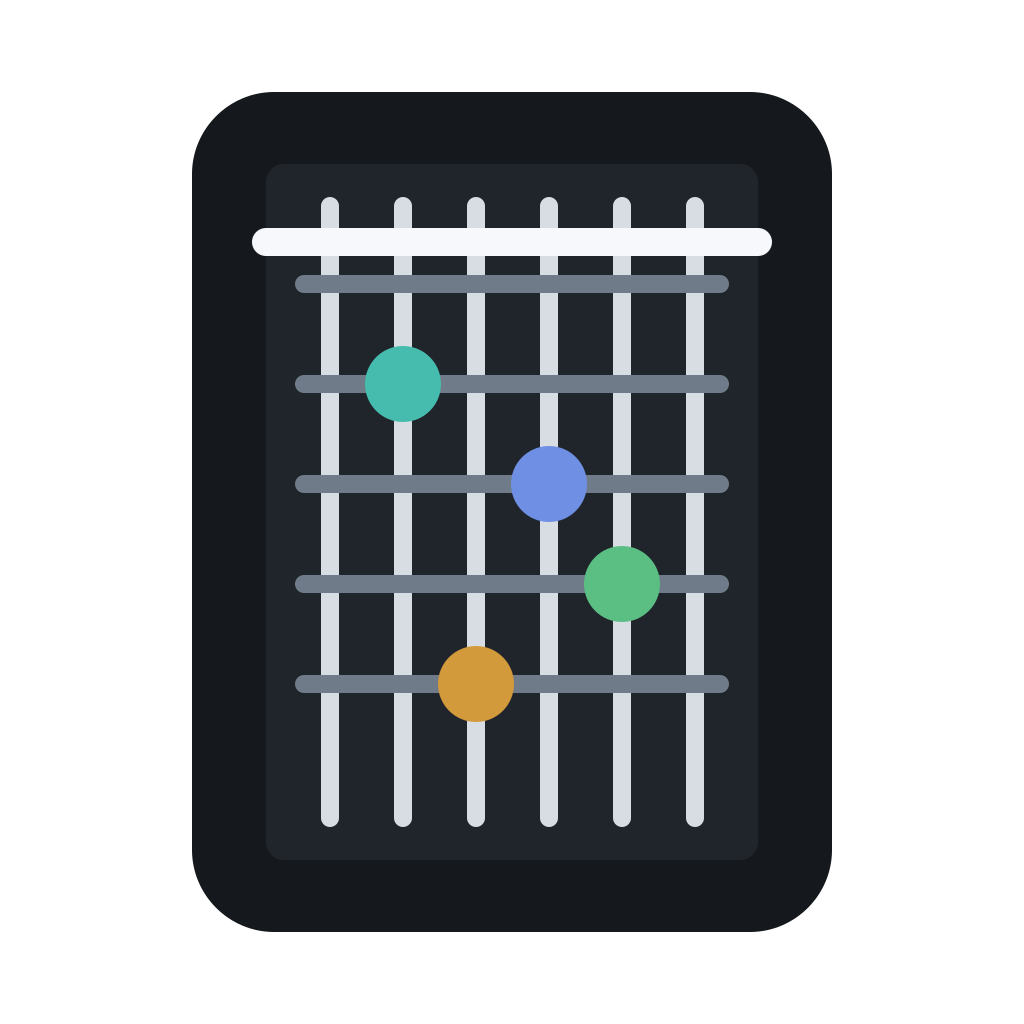
A capo clamps across the fretboard, raising the pitch of all strings equally. Play an open C shape with a capo at fret 2, and you're actually playing a D chord.
The math
Each fret = one semitone. Capo at fret 2 raises everything by 2 semitones (one whole step).
- C shape with capo 2 = D
- G shape with capo 2 = A
- Am shape with capo 2 = Bm
- F shape with capo 2 = G
Why use a capo
- Play in singer-friendly keys while using easy open chord shapes
- Access open-string voicings in keys that don't normally have them
- Change the timbre of familiar chords (higher capo = brighter tone)
- Match the original key of a recording without learning barre chords
What a capo doesn't do
It doesn't change the chord shape — only the pitch. Your G shape still feels like G under your fingers, even though it sounds like A. This is why chord charts for capo'd songs often show the shape name, not the actual pitch.